Thursday, January 22, 2009

The Phantom Queen Awakes: Line-up

(TOC to be announced soon)
It was just too cool not to be announced!


Katharine Kerr: The Lass from Far Away
Elaine Cunningham: She Who Is Becoming
Anya Bast: The Kiss of the Morrigan
C. E. Murphy: Cairn Dancer
Michael Bailey: The Dying Gaul
Peter Bell: The Trinket
Linda Donahue: Silver Branch
Lynne Lumsden Green: I Guard your Death
L. J. Hayward: The Plain of Pillars
Jennifer Lawrence: Washerwoman
James Lecky: The Children of Badb Catha
T. A. Moore: White Heifer
Mari Ness: Ravens
Sharon Kae Reamer: The Raven's Curse
Ruth Shelton: Rising Tide
Martyn Taylor: The Good and Faithful Servant
Donald Jacob Uitvlugt: Gifts of the Morrigan


Edited by Mark S. Deniz and Amanda Pillar
Will be released 31st October 2009.


More news to follow...

Tuesday, January 20, 2009

Grants Pass TOC announced!

Blank white book w/path

Prelude: Kayley Allard
An Unkindness of Ravens: Stephanie Gunn
Boudha: KV Taylor
Hells Bells: Cherie Priest 
Ascension: Martin Livings
Animal Husbandry: Seanan McGuire
Men of Faith: Ivan Ewert
The Chateau de Mons: Jennifer Brozek
The Few that are Good: Scott Almes
Rites of Passage: Pete Kempshall
A Perfect Night to Watch Detroit Burn: Ed Greenwood
Final Edition: Jeff Parish
The Discomfort of Words: Carole Johnstone
Newfound Gap: Lee Clark Zumpe
Ink Blots: Amanda Pillar
Black Heart, White Mourning: Jay Lake
By the Sea: Shannon Page
Remembrance: James M. Sullivan
Epilogue: Kayley Allard


Two stories set in the Grants Pass universe, Warlord of Rhode Island by Rick Silva and Snake Oil by David Priebe, will be released online prior to the official launch!


Edited by Jennifer Brozek and Amanda Pillar.

Pre-order details soon!

Wednesday, November 12, 2008

Three Crow Press - The Morrigan Books Ezine

TCP_submissions

Three Crow Press

On the winter solstice, Morrígan Books will celebrate the divide of light and dark by launching its online magazine, Three Crow Press.

Three Crow Press is an online magazine specializing in quality speculative fiction, supernatural, fantasy (urban, dark and gothic), horror and steampunk as well as non-fiction pieces and articles. Well written young adult will be considered if the piece is within the 16+ market. We are prepared to consider all genre-related works and are looking for stories that capture the imagination of the Three Crow staff.

Winter Solstice Deadline: December 1, 2008

Fiction Word Count and Parameters: Stories should be between 500 and 3,000 words. There is no theme to the issue but story must fit within the specified genres. Payment for submissions are 1 cent (US) per word following acceptance.

Settings: Any part of the world, mythology or culture.

Timeline: We will consider any story set at any time in the past, present or near future as long as the story is within the specified genres.

All materials must be an original work by the submitting individual. Reprint copyrights will remain with you. No simultaneous submissions will be accepted. Previously published material will only be accepted if discussed with the editor first.

For more information please go to Three Crow Press Submissions at:

http://www.morriganezine.com/submissions.html

Monday, October 20, 2008

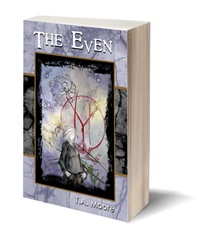
The Even - now available in Amazon and Waterstone's

T. A. Moore's The Even, is now available at Amazon, as well as at Waterstone's and will soon be arriving on the shelves of Forbidden Planet in Belfast too.

Blank white book w/path


You've really no excuse now have you?

Wednesday, October 15, 2008

Fantasy Con 2008

I haven't written about the con yet for several reasons: one of them being time (or rather lack of it), one of them being a few disappointments whilst there and another wanting to get some final stats before posting.

Simon Strantzas (cover designer for How to Make Monsters) has posted a few pics on his Facebook account and I was rather taken with this one:

FCon_2008

From left to right: Moi, Simon (behind), the mighty Gary McMahon (author of How to Make Monsters) and his lovely wife Emily.

This was one of my highlights of the con, having a good old chat with lovely people!

More to follow... maybe...

Tuesday, October 14, 2008

The Even now available at Waterstone's

Blank white book w/path

The Even by T. A. Moore is now available at Waterstone's bookstores. If you order the hardback (or two copies of the paperback) you'll also get free delivery!

Time to grab a copy indeed!

Saturday, September 06, 2008

Fantasy Con updates

It has now been confirmed that I will be attending the Fantasy Con in Nottingham, England and Morrigan Books will launch The Even by T. A. Moore and How to Make Monsters by Gary McMahon, Saturday 20th September, 11 am, bar and dealers' room.

Voices will also be available as a pre-launch limited edition before its official launch at Conflux 5, Canberra, Australia, Saturday, October 4th 2008.

I arrive in England, 17th September and will return to Sweden 24th September. I will be staying in Nottingham 19th - 21st and will be based in Burnley, Lancashire the other dates.

It would be great to meet up with people whilst in England and if you are going to the con or are free on any of the other days then let me know and we can try and organise something.

Monday, September 01, 2008

The Monsters are unleashed - How to Make Monsters available for pre-order

How to Make Monsters is available on pre-order today, with delivery during the weekend of Fantasy Con, 19th-21st September.

Monsters_Thumbnail

Voices now available for pre-order!

Please check the Voices page at Morrigan Books for all relevant details and payment options!

Press release regarding The Age of Blood & Snow

Due to contractual issues, Morrigan Books has been forced to remove The Age of Blood & Snow from its upcoming release calendar.

The anthology is to be repackaged, with a release date penned for March 2009.

More details will follow as soon as we have them.

Monday, August 25, 2008

Ed Greenwood to join Morrigan Books' impressive author list!

I can confirm that Ed Greenwood has agreed to join Cherie Priest and Jay Lake on the post-apocalyptic anthology, Grants Pass, co-edited by Jennifer Brozek and Amanda Pillar, and to be released summer 2009.


This is another step in showing Morrigan Books' dedication to supplying its readers with the best new and existing talent on the market!

Changing of the guard

Today sees Nyssa Pascoe, depart from her role as web-design and support at the company.

Nyssa was vital in seeing the current Morrigan Books site off the ground and has helped so much with the company behind the scenes too.

We are sad to see Nyssa leave and wish her all the best in her future pursuits.

Taking over the role is the talented Jenn Moffatt, who has been very involved in the setting up and design of the new ezine from Morrigan Books, The Morrigan. More on that very soon!

Good luck Nyssa and welcome Jenn!

__________________________________

(cross posted from Morrigan Books)

Friday, August 15, 2008

Stars of Speculative Fiction interviews return!

It's been a little while but I am pleased to be able to send you in the direction of my latest interview, this time with fabled basketball hero and sometimes member of Lobo Luna, Adam P. Knave (just don't call him errant... )

SoSF - Adam P. Knave

While you're over there you might as well check out some of my other interviews, with the likes of Mike Stone, Elaine Cunningham, Adrienne Jones, etc., especially as they're getting some nice grades!

Friday, July 18, 2008

New ezine for Morrigan Books and new face at the helm!

I would like to draw your attention today to some very special news, of interest to at least a few of you in here. After discussions with MG Ellington, promo queen extraordinaire, I can now now announce that Morrigan Books will be taking another step in its quest to ensure that all is dark once more by setting up its very own ezine, The Morrigan.

There is much discussion still but I can at least inform you that MG Ellington has agreed to come on board as editor-in-chief of the zine. I am of course extremely happy about this and am very much looking forward to seeing what she does with our new baby!

Friday, June 27, 2008

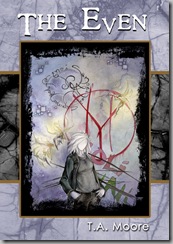
Official cover for The Even

TheEven_Final_blog

Yet again many thanks go to new in-house graphic designer, Reece Notley for turning the excellent artwork of Stephanie Pui-Mun Law, into one hell of a cover!

I can also announce that Morrigan Books has agreed on a contract for a second book from T. A. Moore, entitled Shadows Bloom, such is the belief we have in Moore and her writing.

Friday, June 20, 2008

The Stars of Speculative Fiction #16: Ekaterina Sedia

ekaterina_sedia

Well Kathy, it's all go for you isn't it, what with rave reviews of The Secret History of Moscow and Paper Cities adorning the net, you must be over the moon!

1. What are you up to at the moment, writing and editing wise?

Well, at the moment I am editing Russian Winters – an anthology of fantasy stories rooted in Russian myth for Prime. There are also a couple of editing projects very much in the proposal stage, so I feel it's a bit early to talk about them.

Writing-wise, I have finished my third book for Prime, The House of Discarded Dreams, and am currently working on a YA book. There are a few other things in various stages of development kicking around, and my amazing agent is working hard looking for a publisher for my next book.

Sounds exciting!

You've actually lead me on to a question I wanted to ask someone in your position, which is regarding being a writer who edits (or an editor who writes).

2. I've been told that writers shouldn't edit and editors shouldn't write. What's your opinion?

Obviously, I disagree; at least, I disagree with it as a universal statement. I think it can create a situation where there is a conflict of interest -- for example, an editor inserting a story into an anthology they edit, and that should be avoided (again, there are exceptions). Other than that, I see no particular reason not to put together a book of stories by writers I enjoy and finding a publisher. Writing and editing definitely appeal to different interests, and I am not sure why shouldn't I be allowed to enjoy both.

3. As you know I've read The Secret History of Moscow and loved it (and still have a review that needs polishing). How much research went into that in terms of the mythology/history and how did you come up with the idea?

Not a whole lot of research -- I needed to verify some of the dates, but otherwise I tried to rely on history and folklore generally familiar to Muscovites of my generation (Zemun the Celestial Cow possibly being an exception) -- something we all learned in our history classes and movies based on folktales. The book is largely a riff on the familiar cultural and historical background and the underside of this background. I've always been fascinated with secret histories and hidden realities, so this book was my attempt to poke in the cracks between background reality and understanding of history, and see what crawls out.

4. What do you do when you're not writing (or editing)?

I do work full-time (more than full time, if you consider that I teach at a liberal arts college -- in addition to a heavy teaching load, I do research, so it all adds up to long long hours. In my free time, I garden, cook, occasionally work out or watch movies. Nothing earth-shaking there.

5. Have you any tips for aspiring writers (and indeed editors) who may be reading this?

All advice should help you achieve your goals, so having goals that depend on oneself rather than some outside agency is always good. One piece of advice I found helpful (and I have to credit Jay Lake, who's been a wonderful friend and a greatly supportive influence for it) was "Write more" -- because really, this is something we all can do, and more writing leads to better writing. Another bit of advice is to evaluate all advice given -- there are so many writer-oriented websites, books, blogs, that there is too much advice out there. Most of it applies in certain circumstances or to certain people but not others. Like writing everyday -- great for some, terrible for others. Or avoid adverbs at all cost -- another thing that can be useful in some situations (overused dialog tags, for example) and just horrible in others. Basically, find things that work for you and discard the rest.

As for the editors -- I would say that all editors (and I am including myself in this group) should strive to attract more writers from underrepresented groups -- such as women in science fiction, or writers of color in most of speculative fiction genres (this is, of course, meant to apply to the US). Seek to expand your tastes beyond things you used to love when you were twelve.

And for both writers and editors -- read outside of your chosen genre as well as within it. Good writing is universal.

Lots of good information there, Kathy, thanks for that!

6. Is music a big part of your writing and editing work? Are you a keen listener, are you inspired by music, or do you prefer quiet and solitude?

I do enjoy quiet and solitude, but music is often helpful for creating atmosphere. I do tend toward dark music -- Tom Waits and Nick Cave are my go-to dark musicians. I also do enjoy The Pogues and Clash a lot -- I've been listening to a lot of both lately, while working on my YA book. In any case, music is usually the background, not the inspiration (and that is a good thing, considering.)

Oh my, what fine taste in music you have grandma... I mean Kathy...

7. Who inspired you to write and who is inspiring you to keep writing?

There are plenty writers I admire, but I would not say that any one of them inspired me to write. Writing, IMO, occurs when one feels one has something to say, and should stop when I has said everything one wanted to say.

I like the very vague answers to this question recently... although I do agree with your point.

8. What do you think there needs to be more of in the spec fic industry, specifically within the independent press area?

Good books. More good books. Independent press is positioned to take advantage of many niche markets today, so I would think that it would make sense to publish less mainstream boy's own adventure and paranormal romances where everyone is white and independently wealthy, and focus instead on speculative fiction that is not as widely represented -- fiction by and about ethnic minorities, women, cultures other than Western and so on. We need books about future where not everyone is middle class, we need epic fantasy set outside of what K. Tempest Bradford termed 'McEurope' in her recent Fantasy Magazine article. More different voices, more voices that have not been heard before.

*nods*

9. What is it that draws you into speculative fiction, why are you working in this area?

I think (good) speculative fiction is about the same things as mainstream fiction; spec fiction allows one to explore the same concerns people share in different situations, contrived settings and plain fun tropes. There's just so much realism one can take.Personally, I like writing about characters who are not-quite-human, and take known histories and look for potential weirdness – alternate history appeals to me a lot for that reason. At the same time, speculative fiction allows one to talk about myths and their influence on people as something other than a metaphor -- you can take the fantastic and incorporate it into a normal life; in a way, it is an attempt (at least occasionally) to reconstruct magical outlook of many human societies to who the distinction between the realistic and the fantastic was not necessarily obvious or even real.

10. Last but not least, In terms of the short fiction you write, when sending it away do you look for a particular theme of an anthology, or do you prefer certain editors or do you even care?

Specifically for anthologies -- it all depends. Sometimes a theme might appeal to me, or sometimes the editor or the publisher. Of course, I usually try to honor invitations if at all possible. Another thing I look for are paying markets -- not really a mercenary consideration, but the ability and the desire to pay writers tells me whether the company has the means to get my work seen, and just generally if they respect the writers enough to pay them.

Same is true of magazines, even though there I go more by reputation and their list of contributors. Lone Star Stories and Farrago's Wainscot, for example, pay a token amount but published an excellent list of contributors, so I was proud to appear in both. Overall, I think, I go for the publications I like.

Thank you so much Kathy, for agreeing to come along for the interview. I wish you continued success with The Secret History of Moscow and Paper Cities and I hope the new books do even better!

Monday, June 16, 2008

Katherine Kerr to join Elaine Cunningham in dark Celtic anthology

I can now confirm that Katherine Kerr, bestselling author of the Deverry series, will also be writing for the dark Celtic anthology, to be edited by myself (Mark S.Deniz) and Amanda Pillar.

I am especially excited about Katherine Kerr agreeing to write for us, as the Deverry books were an integral part of my fantasy reading in the 90's and this decade also, and to know that Katherine is going to be sending us a story for the anthology is fantastic news, both for the book itself and for Morrigan Books in general.

Friday, June 13, 2008

The Stars of Speculative Fiction #15: Steve Berman

1590210786

Greetings Steve, nice to be able to interview you. There's been quite a bit going on for you recently with several stories out and nominations abound...

1. Care to tell us all a little bit about your recent exploits?

Thanks, Mark. Well, my novel, Vintage, released last year but the original publisher was bought by another press uninterested in fiction. Fortunately, the book returned from the dead through Lethe Press and became a finalist for the 2007 Andre Norton Award. It’s also been nominated for the Gaylactic Spectrum Award Best Novel. Actually, now that I think of it, I’m nominated in all three Spectrum categories: for Vintage, for So Fey (Best Other Work), and “Bittersweet” (Best Short Story) from the Journal of Mythic Arts.

I’ve been promoting the 2008 release Magic in the Mirrorstone of late. It’s a young adult fantasy anthology I edited for Mirrorstone Books (the children’s publishing arm of Wizards of the Coast) with fifteen stories by such well-known authors as Holly Black, Greg Frost, and Nina Kiriki Hoffman.

I have stories in two Prime anthologies this summer, and a new annual anthology I edited reprinting the best gay speculative fiction, Wilde Stories, releases from Lethe Press at the month’s end. Oh, and my next short story collection, Second Thoughts comes out in time for my birthday in August.

As I said, the odd thing here and there...

2. Who got you writing and who inspires you now?

I don’t think there was any single individual or even author that inspired me to write. When I was in elementary school I wrote these really awful short short stories about a secret agent. I shudder to think of them now. The rest of class would groan when I was about to read one.

Who inspires me now? I think inspiration is the wrong term. Rather than a muse, I have support. Support from my family, support from good friends.

Support is good, support is underrated.

3. What the hell is speculative fiction anyway and do you consider yourself a speculative fiction writer?

You want me to speculate on speculative fiction? All storytelling demands some imagination, on the part of the teller and certainly with the listener/reader. But, to me spec fic is any form of fiction where something odd or weird is a necessity for the author to tell the story. Thus, it could range from high fantasy to space opera, supernatural horror, to magic realism. Parables and fairy tales are also often speculative fiction. Without the strange element, the story would seem truncated to the reader.

I would say that, outside of some articles and essays, almost everything I’ve written is speculative fiction.

It's been an interesting question this one, as I don't think I've gotten the same answer twice...

4. What should publishers like myself be thinking of at the moment when looking for new work in the spec fic scene, what do you think the market is missing, and what are its strong points?

This is a tough question. My first reaction is: publishers need always be concerned with quality versus trend. I’d rather read a well-written book with familiar themes than something trendy but poorly constructed.

As for what is missing, I’m still surprised that the speculative fiction field seems very much a white room; there are too few minorities (as much as I hate the world, in spec fic its apt to describe authors’ ethnicities). The question to ask is: why does the field, in all its varied scope, not attract more African-American, Asian-American, and Latino-American writers? There’s some disconnect here. If I went to the cinema when Lord of the Rings was playing and took a census, what would be the ethnic mix? Certainly more than what was on the screen. Who was the last non-white hero or heroine of a well-done science-fiction movie?

That said, there are some strong points to the current market. Sexual orientation is no longer the boogeyman as it once was. Mainstream publishers are releasing books that deal with gender issues. I’d like to think this reflects on a wider readership. We still have far to go, though.

Agreed (not that my books are breaking any boundaries in that area though...)

5. What do you do when you're not writing?

Mostly think about why I’m not writing. Then feel guilty for not writing. Okay, that’s not entirely true. I do have a day job. And I do spend time with my parents a great deal. Otherwise, I’m really dull. I read, I watch old movies.

Ah that guilty feeling when not writing...

6. Onto the obligatory music question (well for me anyway): are you a music listener when you write or are you a lover of silence? If so what do you listen to or what inspires you?

Well, if I’m writing during breakds in the dayjob, then there’s no music. At home, I do try and have something playing the background. I’m sure I’m not alone in liking an eclectic selection of music. Let’s see... what’s on my iPod. Terri Windling infected me with love for Seth Lakeman. Then there are musicals (Hairspray, Guys and Dolls, Oliver!). Some Bob Hope, some Melissa Etheridge. A dose of Cute is What We Aim For, a dash of Madeleine Peyroux with a pinch of Girlyman. And every playlist deserves some Gin Blossoms or Ottmar Liebert.

*tries to get his around Bob Hope to spec fic... fails*

Bob Hope and spec fic are perfect today. The Road movies often featured bizarre events. My favorite, Road to Morrocco, featured talking camels and a ring that granted wishes. Then Hope was the star of Ghost Breakers, a terrific voodoo comedy.

7. Where do you see yourself as a writer in five years?

I’m never good at prognostication. For years I tried Ouija until someone told me the proper method is through a board and not a bowl of alphabet soup.

All I can hope for is that I’m still alive, still challenging myself to write better stories, and maybe even still being read.

*laughs* are you saying it isn't done through soup?

8. What tips do you have for the new and budding writers out there?

Well, too often I hear new writers boasting how little revision they do. This misconception of the writing process—that revision is proof of poor skill—actually works to their detriment. Revision should be embraced for the powerful tool that it is.

Also, in regards to the notion of support I mentioned earlier, every writer benefits from having other writers in his or her social circle. It could simply be a writing buddy or as advanced as a critique group, but being able to meet with a friend creates a welcome environment for talking about stories, writing techniques, and comfort during some of the lonelier moments that happen to all writers.

Lastly, do not compare your career to that of others. Trust me, that path only leads to melancholy. There will always be some writer younger than you, or more skilled, or faster, better paid, and so on. Telling stories for pay is not a competition. Yes, there are awards for writers, but you should concern yourself with the rewards: finishing the best story you can and knowing that some stranger out in the world you could never hope to meet in your lifetime is reading your words and finding meaning in them.

Excellent advice, some stuff to be noted here!

9. Why mroctober on live journal and why the pumpkin head? Is that a really obvious question?

*notes that his birthday is August*

Oh, back in 1994, I had my two first professional sales, one to Dragon and one to White Wolf Magazine. Both were Call of Cthulhu gaming articles and both released in October. I spent a fortune having them framed. My friends started calling me Mr. October after that.

Why the pumpkin head? Oh, Halloween is my favorite holiday and nothing seems to evoke that image better in my mind than a scarecrow with a jack o’lantern noggin.

Okay, I'm glad I asked as it's not as obvious as first seemed!

10. Last but not least I saw in your first answer (and from the excellent cover artwork) that you've edited an anthology. How was that and how does it compare to writing?

I’ve actually edited four anthologies to date. It’s a very different process, more like buying a puzzle, then discovering that you have to choose the pieces first from several boxes and find the best way for them to fit together.

Writing for me is an introverted pursuit that is prone to anxiety because the success or failure relies only on myself. Editing allows me to be more extroverted. The very nature of inviting authors to submit, of choosing stories, brings me into contact with a number of extraordinarily talented people. Plus, the caregiver in me enjoys sharing words I have come to value with others.

Nice to hear! Thank you so much for coming along and I wish you all the best with your projects and really hope to see something of yours over at Morrigan Books in the future!

Thanks, Mark. I’m truly flattered you took the time to talk with me.

Sunday, June 08, 2008

New York Times bestselling author comes to Morrigan Books

After discussions over the last few days, I can now confirm that Elaine Cunningham, bestselling fantasy author, is to work on a future Morrigan Books anthology. The fine tuning of the anthology is still under way but I can inform interested readers (and indeed writers) that it will be dark fantasy and will focus on Celtic mythology, with our very own namesake, Morrigan, taking an active role.

More news to follow soon...

Friday, May 30, 2008

The Stars of Speculative Fiction #14: Andrew McKiernan

medusa

Jolly nice to be able to have this chat with you, Andrew, as one of those on the rise within speculative fiction, I thought it would be good to get an interview with you before you got too big and too famous to want to talk to me.

Why, thank you, Sir. It's a pleasure to be here. Although I don't think there'll ever be a time I would be too big to talk to you... unless I was so big my larynx collapsed under its own weight and my lungs were unable to create the extraordinary pressures needed to breathe.

1. Well you've been on the Australian scene for quite some time now as artistic editor and illustrator, why the move over to fiction, and how does that feel at the present?

I'm not sure if it was actually a move from one to the other. In my mind I've probably always seen myself as a writer first. I know I was writing my own stories pretty much as soon as I could string a sentence together. Back then, I think I had this notion that all stories were illustrated. All the books I owned had illustrations, and so my stories needed illustrations too. Being quite a solitary child, I gave myself the task.

I don't think I was ever really a huge comics fan, but for me, words and images seemed to always go together. I was always writing though, secretly for much of my life. I never really felt the need to show others the stories or poetry I was writing. I kept drawing too, until the end of Yr12 Art in High School. My art teacher didn't see 'illustration' as art. And, as I chose air-brushing for my major works instead of the more traditional oil-painting or sculpture – and the fact that I didn't have breasts, which he enjoyed looking at more than the artworks – my teacher marked me down and told me "if you can't paint or sculpt, you'll never be an artist". I gave up for a long while after that.

It wasn't 'til I got fed up after 8yrs working in Purchasing and Logistics that I said 'stuff it!' and started my own graphic design business. I had no training, and little real experience, but lots of drive and ambition. I think that has worked out pretty well for me. Running my own business also gave me the time to concentrate a little more on my writing. Joining a couple of online writing groups in 2002 – plus constant pressure from my wife – gave me the confidence to finally start sending some of my writing out into the market place. So far, that's worked out pretty well for me too.

Having my writing accepted for publication sort of feels like I've finally got to the place I wanted to be right from the start. I'll never give up illustrating, but it was almost like it was always more of a stepping stone than a goal.

Sounds brilliant and very much as though things are moving in the right way!

2. In terms of you being a newbie to the writing scene (in terms of publication) but having being involved in the industry as a whole for quite some time now, do you think you have come in the Australia speculative fiction scene at the right time, how do you assess it just now?

Oh yes! Most definitely. Australian Spec-fic is going great guns at the moment – here and overseas. Fantasy and Science Fiction authors such as Trudi Canavan, Karen Miller, Jennifer Fallon, Sean Williams and Marianne de Pierres have really started making names for themselves in international markets. Some of the Aussie short story writers have created some buzz too.

The small-press scene is still chugging along much as it always has, but I think the big difference is that the product has become much more refined and professional. Some of the anthologies that have come out over the last 2yrs, and those that are slated for release this year or next, look like they are going to be absolutely brilliant.

I'm pretty proud to call myself predominately a 'horror' author over here at the moment too. The formation of the Australian Horror Writers Association has done an enormous amount both for its members and to increase the awareness of horror fiction in the general media. Will Elliott's 'The Pilo Family Circus' winning the ABC Fiction Award was quite a coup for horror fiction, and films such as Wolf Creek, Rogue and the Australian written Saw have done enormous amounts to bring 'horror' back to the masses. The resurrection of 'Horror' is a worldwide phenomena at the moment, and I think Australia is really riding the crest of that wave.

I didn't realise Saw was Australian written, although have tended to avoid those type of films – enjoyed Wolf Creek though!

3. You mention horror as a particular favourite of yours. Who got you started with your own writing and who are your inspirations now?

I remember my Great Grandfather telling 'The Monkey's Paw' on a stormy night when I was really young. That scared and excited me a lot. And my grandmother cleaned a local library at night. She'd pick me up each evening and I'd browse the shelves, all on my own, for a couple of hours while she cleaned. The library was dark and very, very empty and silent. That was really creepy, but I loved it, searching those dark shelves. That atmosphere probably helped refine my enjoyment of the darker literature.

I was watching the early Universal and later Hammer Horror films from a pretty young age too, and I read 'Carrie' when I was nine years old. From there I immediately grabbed a copy of 'Cujo' and the 'Nightshift' collection and I was pretty hooked on Stephen King from then on. My love of horror literature (both old and new) just sort of blossomed from there.

I'm pretty inspired these days – at least in my mind if not in my writing – by authors such as Mark Z. Danielewski and Chuck Palahnuik. 'House of Leaves' was a pretty amazing book – what it did with the way written stories can be told really had me scared whilst reading a book for the first time in years. Palahnuik is good too. Some of the tales in 'Haunted' were just wonderful. Others fell a little short of the mark and one – you know the one – went a little too far for my mind, but I feel he's really trying to do something different. Otherwise, Stephen King still gets me going when he writes well - 'Duma Key' was a good return to form. And Dan Simmons: when he writes horror it always impresses me. 'The Terror' was definitely one of my favourite books of 2007.

*nods* some good stuff there and interesting with the library story, sounds fun! I've never been a big lover of King but then that's just me.

4. What would be your advice for new authors then, or at least those trying to break into the market?

My advice on writing is only ever one thing – just write! I'll have plenty of advice once you've actually written something – on grammar, on character and plot and voice – but until then my advice is just to write.

There is a lot you can read on how to write and every author seems to have a different opinion. I'm sure their advice works for them, and I'm sure I have my own idiosyncrasies, but I don't think there is ever any 'magic bullet' advice. You could spend your entire life reading up on 'how to write' and never get anything accomplished. I think that is a very big trap some people get caught up in.

And, when you do write, just write the story that you want to read. Don't try and fit it into a market or a genre or worry about whether it will fit into the roster of Publisher X. I think doing that does a great disservice to the story you are trying to tell.

Then, once you're done, don't be afraid to send your stories out there into the market place. That is a hard step for first authors to take. If you're still a bit insecure about your writing, there are plenty of writing groups – both 'real-person' and online – that can offer advice and support.

I think that sums it up perfectly, I don't think I've met two writers yet who have the same technique for writing!

5. Moving on to your artwork now and there have been some rather big developments there too. Care to tell us about them?

Well, "Shards" is probably the biggest thing, and definitely the most challenging. "Shards" is a book of 40 short stories (mainly flash) written by Shane Jiraiya Cummings and due out from Ticonderoga Publications in October. I'm doing the cover and illustrating all the stories with full page black and white images and have been working on this with Shane for around 2yrs now. I'm quite eclectic in my artistic style and methods and trying to keep all 40 images in a coherent style that carries through the entire book has been quite tough. Shane is a brilliant author and the stories are sometimes quite hard to find the right image to illustrate without giving everything away with a glace. This is especially hard with the flash fiction where you don't have too many words to work with. I'm very happy with the results though and with how the constraints have helped me develop my own style.

Other than that, I have an illustration and a short interview forthcoming in multiple Stoker winner Jonathan Maberry's next non-fiction book "They Bite". I've also done the cover for Eneit Press's next installment in the 'In Bad Dreams' anthology series and have an illustration for a Nathan Burrage story in Aurealis #40.

Productive indeed!

6. What do you do when you're not writing?

I design and develop websites and maintain quite a few for my clients. That's still my main bread and butter. I also do graphic design work, commission artwork for Aurealis and do all the layout and typesetting for each issue. On weekends I work in a bookshop.

I play with my boys whenever I can and spend a couple of hours each night just chatting with my wife about stuff. I don't watch too much TV anymore, although there are a few series (Deadwood, FarScape, Firefly) that I've enjoyed watching in their entirety on DVD. I play computer games every now and then but I'm bored if there isn't a decent storyline or enough freedom for me to play the game the way I want to. Recently I've really enjoyed Far Cry, BioShock and Stalker:Shadow of Chernobyl... especially Stalker, which is a very dark and atmospheric game, and very open ended in its gameplay. You can basically go where you want and do what you want. You can create your own story and I like that in a game.

Most of the time though, I'm just reading and/or listening to music. There are too many good books out there that I haven't discovered yet for me to ever stop reading.

Stalker is something I've been thinking about... hmm...

7. What is speculative fiction then?

Probably the toughest question of all. A marketing term? A catch-all phrase for genre fiction that is not Crime or Romance? I personally think that all Speculative Fiction can be classed as "What if....?" stories regardless of which sub-genre they tend to filter down to. That includes Science Fiction, Science/Epic/High/Urban Fantasy, Horror, Alternate History, Slipstream and many others. I'm the sort of person that doesn't really have a preference either. I'm just as happy reading or writing in any of those sub-genres of Speculative Fiction.

*nods* I think the fact that the descriptions have varied in my short section of interviews says much about the term.

8. Onto a topic now that we have spent many hours discussing and that is music. How important is music to you when you write and are you a believer in mood music or can you write to anything?

Yes, music is very important to me. I can't really accomplish much in my life without having some sort of soundtrack behind it, and writing is no exception. I've tried to write in silence a few times and it has been an absolute disaster. Music seems to really help insulate my mind from the distractions of the outside world and, living next to a main road and having two young boys in the house, I've got plenty of those. I've got pretty broad musical tastes and most of the time, especially whilst doing art or coding a website, I can just keep my music collection on random. 4,500 songs, and I never know what's coming up next. It is like having your own radio station!

When I'm writing though, I tend to find mood music to suit the story. I listened to lots of Dead Can Dance, and all sorts of TajikPop and traditional Tajik music whilst writing 'Daivadana' for In Bad Dreams 2. I can possibly take that to a little bit of an extreme sometimes though. Whilst writing 'All the Clowns in Clowntown' (forthcoming in the 'Macabre' anthology) I thoroughly alienated my family by playing nothing but hour-after-hour of Circus marches like Sousa's 'Liberty Bell March' (better known as the Monty Python theme). They threatened to take my computer away from me if I didn't stop.

Heh, must remember to dig out my old The Best Circus Themes in the World Ever (vol. 18)

Really? You've got a copy of vol.18? I think that's the only one of the 50 volume set that I'm missing!!

Oh, I'll do you a copy! *uncrosses fingers*

9. So what's your future plans, what's coming up for Mr. McKiernan?

The rest of this year looks like the time when all my submissions and acceptances will see the light of day. I've got stories in Brimstone Press's 'Macabre: A Journey Through Australian Horror", Shadowed Realms webzine and Black Box anthology, as well as one in 'In Bad Dreams 2' and Aurealis #42. There are a couple of other completed shorts that I'm still shopping around.

After that, I've got some stories you'll have a big hand in bringing to the public. My Gilgamesh story for Gilgamesh Press is finished the research stage and just about to hit the hard writing stage. The research has been a lot of fun, and I think the writing will be even more fun. I've also got a God Machine story to produce for Morrigan Books and I've got a lot of ideas percolating for that one.

When I'm done with those it will be back into novel mode. I've got a total of 8 already planned (two trilogies and two stand-alones) and one stand-alone is already about 1/2 done. By the end of next year I expect to have at least two of them completed and looking for homes.

Taking it easy I see then...

10. I know you've moved away from the web design a little over recent months but would you have any advice for authors wanting to set up their own site (or indeed fancy a revamp of their existing one)? What should they be doing/not doing?

I think author sites have become a pretty essential part of marketing your work these days. The internet is a great tool for social networking, and book readers are a big part of that. Word of mouth through internet channels has been extremely effective for a number of authors and their websites have played a big part in getting that information out there and keeping readers informed.

My main piece of advice is... get a professional to do it. I'm not just saying that to get business either, as I'm happy to be moving away from web work. But, if your site looks unprofessional people will assume your work is too.

Also, don't overburden yourself! If you spend too much time updating a fancy website you'll leave little time for writing. If you don't think you can maintain a regular author-blog, don't commit to one in the first place: no blog at all is better than one that hasn't been updated in 12 months. If you can't see yourself spending an hour a day writing a blog post, you're better off just posting a bio, a list of your published works, and maybe an extract or two.

Only do what you can manage, and don't let it take away from your writing time. That's probably the best advice I can give.

All sound advice, I'd agree with pretty much all of that too.

Thank you so much for coming along Andrew and I hope all goes well for you on all fronts for many years to come!

My pleasure, and thanks very much for inviting me along.